
Decimal feet or feet and inches? Why two grade rods on one site can ruin a pour
Before a concrete pour, a foreman checking lasers with the excavation superintendent found their grade rods used different scales: decimal feet on one, feet and inches on the other. Read one as the other and an elevation can miss by more than an inch.
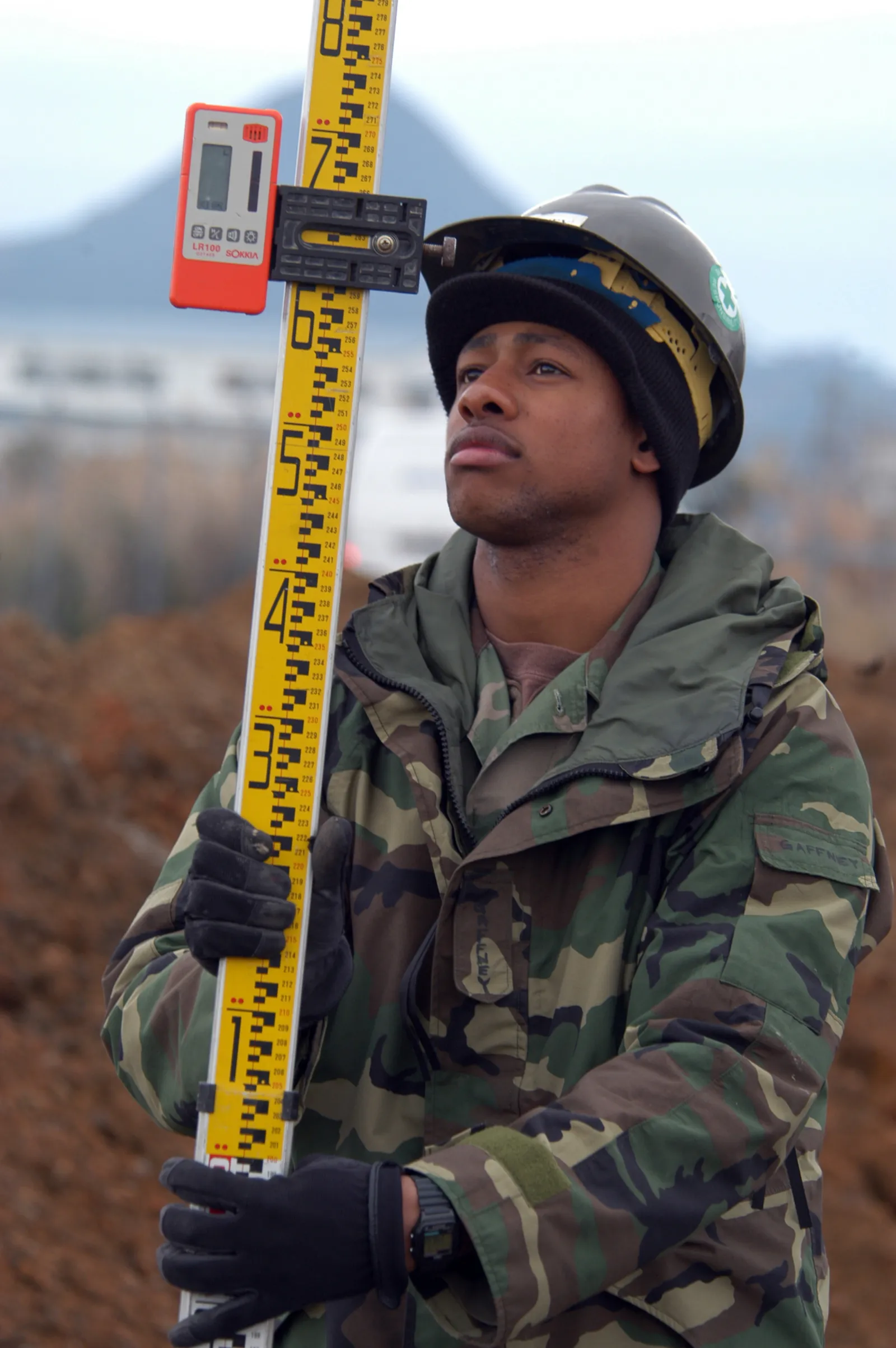

The mix-up came to light this week on Reddit's r/Construction. The foreman's rod was graduated in decimal feet, the unit civil drawings and grade stakes use. The excavation superintendent carried an architect's rod, marked like a tape measure. Both are normal tools. Trouble starts when a number read on one rod is called out, written on a stake or set as a laser target on the other.
Johnson Level & Tool, which sells both kinds, describes the engineer's rod as split into feet, then tenths, then hundredths, with whole feet in red. The builder's or architect's rod shows feet, inches and eighths of an inch. The math is short: a tenth of a foot is 1.2 inches, a hundredth is about an eighth of an inch, and inches divided by 12 give decimal feet.
The misses cost real money. On a decimal rod, 2.3 means 2 feet 3.6 inches, not 2 feet 3 inches. Gradelog, a company that makes grade-logging software, warns that a 0.05-foot slip like that at a benchmark is enough to push a slab out of tolerance. Read 0.9 foot as 9 inches and the grade is off by 1.8 inches. ACI 117 allows 3/4 inch either way on the top-of-slab elevation of a slab on ground, and the same on the fine grade below it. Low grade also eats concrete: engineer Kim Basham, writing in For Construction Pros, figures each 1/8 inch the grade sits low adds about 0.39 cubic yards of concrete for every 1,000 square feet of slab.
The fix is procedure. Agree on one unit before the first shot and write it on the grade sheet. Convert the benchmark and target readings once, on paper, and have someone else check the math. Then shoot the same benchmark with both rods. Gradelog advises reading critical shots twice: if they disagree by more than 0.01 foot, something on the setup has moved.
Why it matters: Check which scale every rod on the pour uses, convert targets once in writing, and shoot a known benchmark with each rod. A tenth of a foot is 1.2 inches, and ACI 117 gives only 3/4 inch either way on slab elevation.
Sources
- Slabs-On-Ground: Slab Thickness and Base TolerancesFor Construction Pros, Aug 13, 2015
- How to Read a Grade Rod: A Field Guide for Construction CrewsGradelog, May 6
- Grade Rods: All About Grade RodsJohnson Level & Tool, Nov 5
- Serious question - What’s the point of this grade rod?Reddit r/Construction, Nov 5