
Caulk is not flashing: how the WRB should lap around a window
A photo thread on Reddit's r/Construction asked how a job's weather barrier should tie into its windows, or whether sealant does all the work. Code and manufacturer guides rely on laps: sill flashing first, jamb flashing over it, head flashing on top, and the wrap folded down over the head.
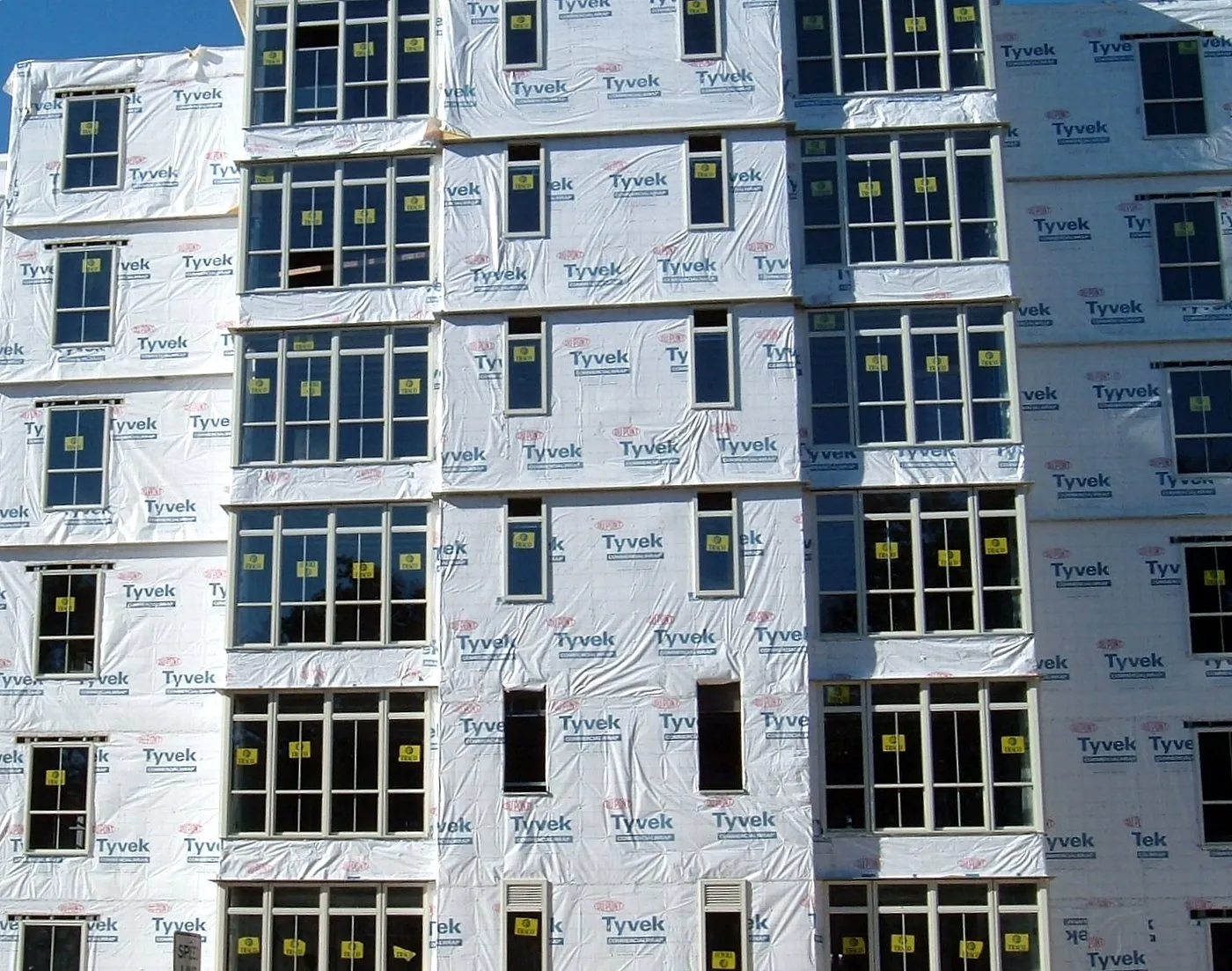

The poster asked how the housewrap should tie into a set of new windows, or whether sealant was doing all the work. Sealant behind the flange has a job, but the code expects flashing laps to carry the water. Section R703.2 of the 2021 International Residential Code requires an unbroken water-resistive barrier under the cladding. Section R703.4 says window flashing must lead water back out to the cladding surface or onto that barrier, following the window maker's instructions first and the flashing maker's second. Where neither gives details, a sill pan is required, with flashing at the head and sides. ASTM E2112, the standard practice for installing windows, says the manufacturer's instructions prevail when the two conflict.
DuPont's sequence for a flanged window set after Tyvek housewrap shows the order. Cut an I in the wrap and fold the sides into the opening. Make two 45-degree cuts running at least 8 inches out from the top corners and tape that flap up. Line the sill with flexible flashing cut at least 12 inches longer than the opening, carried at least 6 inches up each jamb and lapped 2 to 3 inches over the wall face. Run sealant behind the head and side flanges; at the sill, leave gaps so water can drain. Set the window, tape the jambs from above the head flange to below the sill flashing, and tape the head across both. Last, drop the wrap flap over the head tape and seal its cuts.
Reverse any of those laps and water is steered behind the barrier. DuPont's drawing marks sill flashing lapped over the jamb tape as incorrect. Randy Williams, a contractor and energy auditor writing for Andersen Windows, tells installers to follow the path of a raindrop, since water that gets trapped can damage the structure. ASTM E2112 also puts the general contractor in charge of coordinating trades and sequence.
Three things are worth checking before the cladding hides them: sill flashing is in place, jamb tape covers its upturned ends, and the wrap flap lies over the head tape with its diagonal cuts taped.
Why it matters: Leaks at window sills and heads can go unseen behind cladding while they damage the wall. Before siding goes on, check the order: sill flashing first, jamb tape over it, head tape over the jambs and the wrap flap over the head.
Sources
- E2112 Standard Practice for Installation of Exterior Windows, Doors and SkylightsASTM International, May 4, 2023
- Integral Flanged Window Installed AFTER the DuPont Tyvek WRB: Installation SequenceDuPont, Jul 9, 2024
- Window installation and water resistive barriers (WRBs)Andersen Windows, Nov 5
- how does the WRB get properly tied in to these windows?Reddit r/Construction, Nov 5