
New vinyl siding over old wood siding: will the roof flashing still keep water out?
An Indiana homeowner paying one contractor $56,000 for a roof, vinyl siding, gutters and soffits, half of it up front, asked whether vinyl hung over old wood siding will stay dry where the roof meets the wall. Code and the siding manual say it comes down to how the flashing laps.
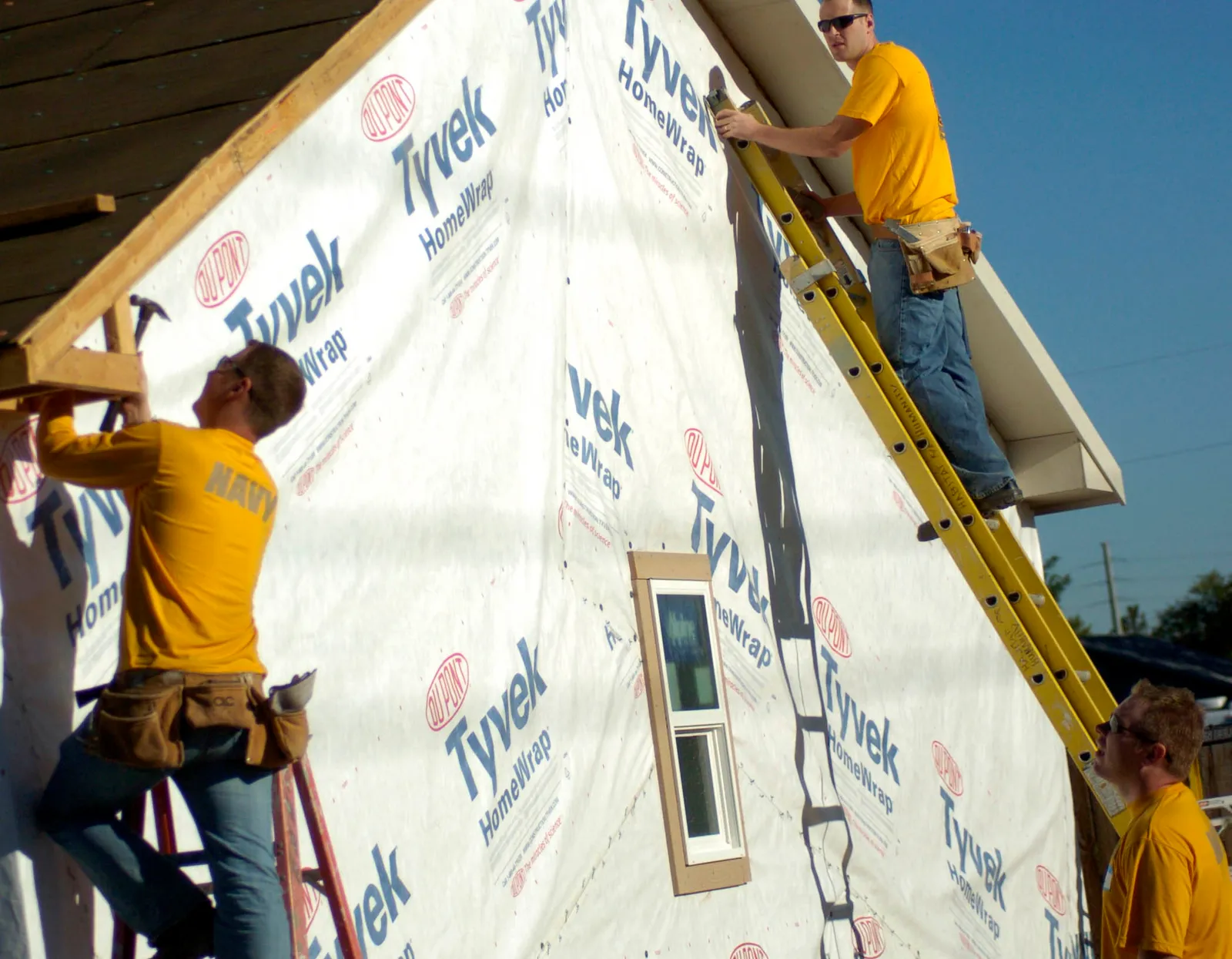

She posted the question this week on Reddit's r/Contractor. The crew is putting a weather barrier and vinyl over the house's old wood siding, and the step flashing along the roof was already tucked under the old boards. She also asked which work orders and closeout papers to expect.
The siding industry's manual allows re-siding over sound wood. The Vinyl Siding Institute guide, now published by the Polymeric Exterior Products Association, says to nail down loose boards, replace rotten ones, fur out uneven walls and never hang vinyl over rotting wood. It calls for a continuous water-resistive barrier behind the vinyl, with flashing installed first and tied into that barrier at openings, corners and roof-wall intersections.
The roof line is where these jobs leak. The Energy Department's Building America Solution Center says step flashing should climb the wall by at least 4 inches and reach 4 inches onto the roof, with the wall's barrier lapped over it and siding held at least an inch above the shingles. Where an eave meets a sidewall, section R903.2.1 of the International Residential Code requires a flashing that turns water away from the wall, called a kick-out; metal ones must be at least 0.019 inch thick. The guide warns that vinyl can hide wall damage for years. With the step flashing behind old boards and the new wrap on their face, the owner should ask the crew to show how the two layers lap at the roof and where each kick-out goes.
On paperwork, Indiana's Home Improvement Contract Act requires a written contract with a detailed description, approximate start and finish dates, the price and a statement on whether subcontractors or suppliers will furnish labor or materials. A change binds the owner only if she signs it. Under the state lien law, a supplier or sub working on credit for her contractor must notify her in writing within 30 days of first delivery to keep lien rights. She should keep those notices, collect signed lien releases from each sender before the final payment and photograph the flashing before siding covers it.
Why it matters: Re-siding jobs leak at roof-wall joints. Before vinyl covers the wall, confirm the wrap laps over the step flashing and a kick-out sits at every eave-to-wall corner, and tie the final payment to a walk-through and signed lien releases.
Sources
- Step and Kick-Out Flashing at Roof-Wall IntersectionsBuilding America Solution Center (U.S. Department of Energy), Sep 14, 2020
- How to Install Vinyl Siding: Getting StartedPolymeric Exterior Products Association, Sep 8, 2025
- Indiana Code § 24-5-11-10. Contract RequirementsJustia (Indiana Code), Nov 5
- Indiana Code § 32-28-3-1. Mechanic's LiensJustia (Indiana Code), Nov 5
- Homeowner question: Quality and work ordersReddit r/Contractor, Nov 5