
Before restarting Jeddah Tower, engineers laser-scanned 60 floors to see how the concrete had moved
Before building resumed on Jeddah Tower, St Petersburg survey firm Trimetari Consulting laser-scanned the roughly 60 floors already standing and checked the point cloud against the BIM model. The project team says it found one minor anomaly, Arabian Business reported.
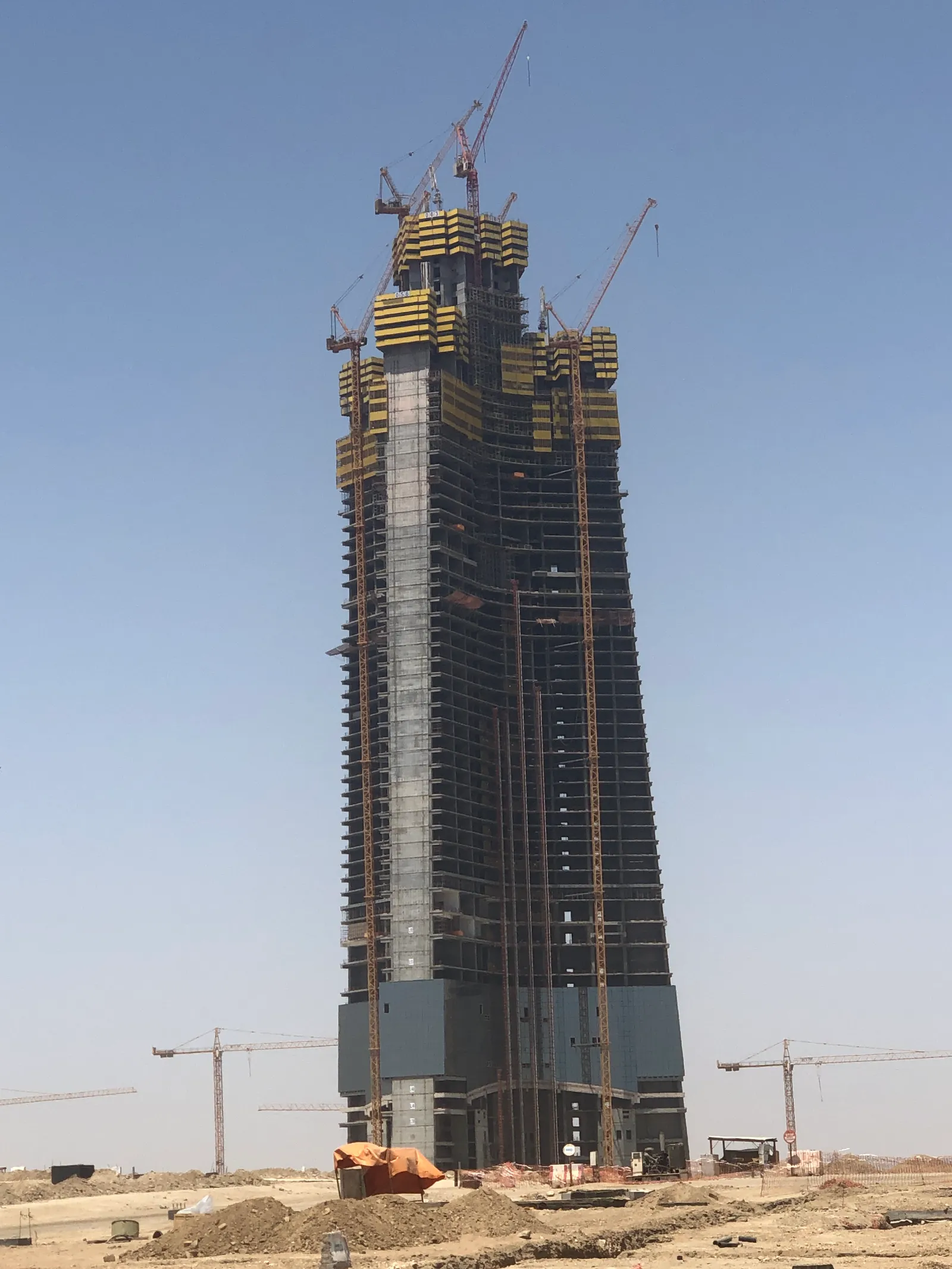

Concrete keeps moving long after the pour. It shrinks as it dries out, creeps under sustained load, and the foundation below it can settle. Jeddah Tower sat unfinished for years after work stopped in 2018, with about 60 floors and roughly 125,000 cubic meters of concrete in place, Arabian Business reported. Before adding floors on top, the team had to know the true geometry of what was already there. The original drawings could not tell them that.
The job went to Trimetari Consulting, a St Petersburg firm that has also worked on Russia's Lakhta Center. Laser scanners record millions of points off every surface they can see; stitched together, the points form a 3D record of the structure as it exists. Engineers then laid that record over the original BIM model to spot where walls and slabs differ from their designed positions. The project team says no building anywhere has had a bigger point-cloud survey. Leica Geosystems, which makes the scanners, got involved and supplied its top-end equipment so the survey could reach the needed accuracy across a structure that size in a short time.
The project team says the scan turned up one minor anomaly in the entire structure. The team said the result also vouches for the work of Saudi Binladin Group, which built the lower tower from 2014 to 2019 under engineer Bassam Nasser. The report did not describe the anomaly, how it was fixed, or the tolerances used to judge the scan.
The tower is planned to exceed 1,000 meters, which would take the height record from Dubai's 828-meter Burj Khalifa.
Why it matters: Any concrete job that sits idle, from a parking deck to a high-rise, keeps moving while it waits. A scan of the as-built structure compared with the model before restart tells the next crew where new work has to adjust and gives everyone a documented baseline.
Sources
- How Jeddah Tower tackled the unusual problem of shrinking concrete after its construction delayArabian Business, Nov 8