
Can conduit bond through concentric knockouts? What the NEC and Canadian code actually say
Under the NEC, metal conduit landing in a cabinet, junction box or pull box through leftover concentric or eccentric rings needs a bonding jumper at a service, and on circuits over 250 volts to ground unless the box is listed for bonding, UL says. Canada's code handles the joint differently.
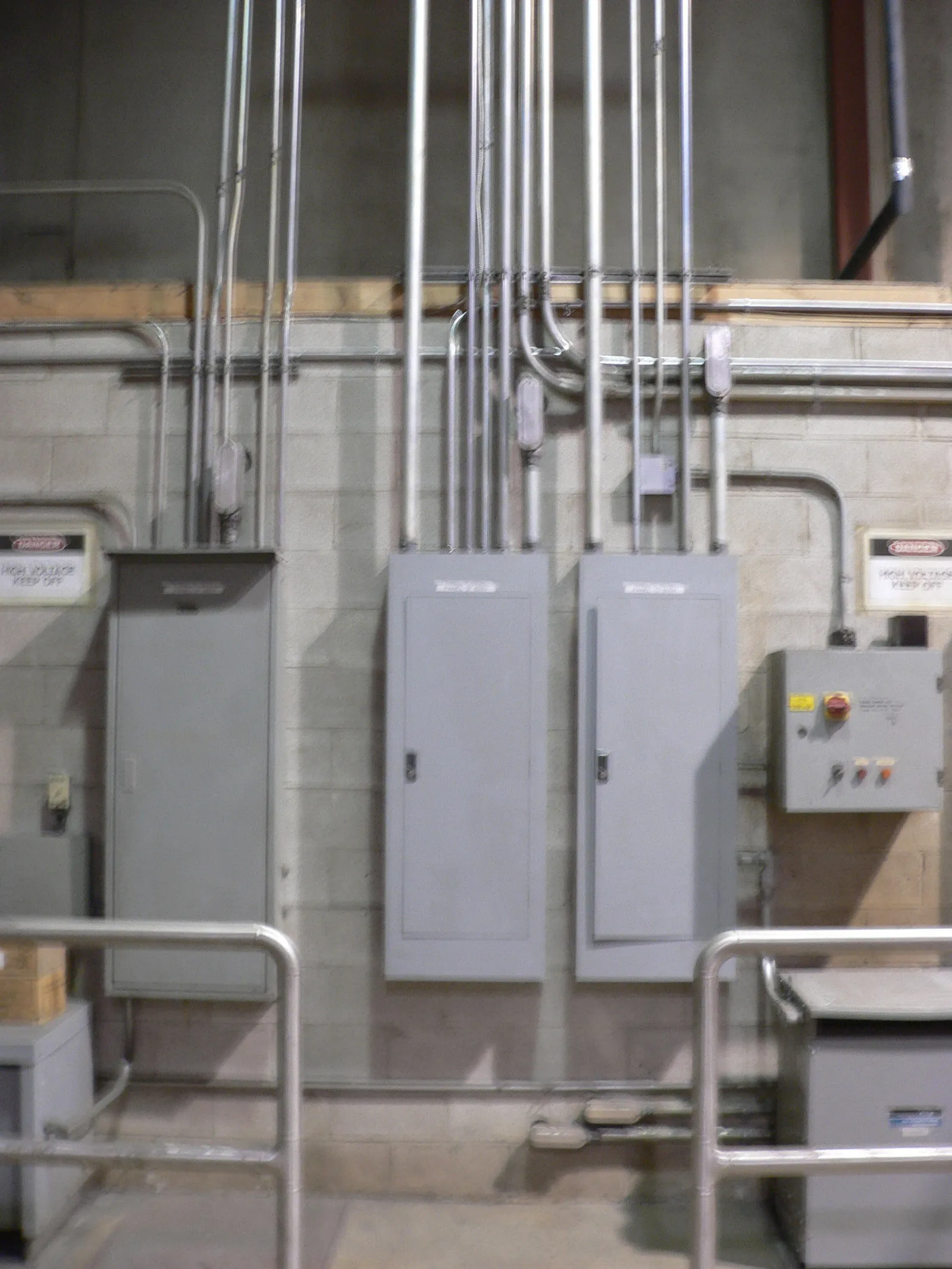

The question came from a job described this week on Reddit's r/electricians. An electrician licensed in Colorado and Canada says a foreman wants 3-inch EMT between tap boxes on a 600-volt apartment distribution with 600/208-volt transformers to carry the bond through concentric knockouts. The electrician wants bonding bushings.
In the US, two NEC sections decide it. Section 250.92(B) covers services, and UL Solutions reads it as requiring bonding jumpers around ring knockouts unless every ring has been removed. For circuits over 250 volts to ground, such as a 480Y/277 feeder, Section 250.97 lets ordinary connectors go through ring knockouts only when the box or enclosure is listed for a reliable bonding connection. According to UL, metallic outlet boxes in its QCIT category carry that evaluation. Cabinets, cutout boxes, junction boxes and pull boxes are listed under UL 50 without it, so they need a jumper unless all the rings come out.
The gap is a fault test. For outlet boxes, UL locks a 6-inch piece of rigid conduit into the smallest ring with two locknuts and runs 1,180 amps for 4 seconds through a 1/2-inch knockout, or 1,530 amps for 6 seconds through 3/4- and 1-inch sizes. The outer ring has to stay in place and keep continuity, and UL notes the test often produces arcs and scorching. UL 50 enclosures never face that test. UL also tells inspectors to confirm the remaining rings were not damaged during installation.
Canada attaches the extra hardware to the service. Under Rule 10-604 of the 2024 Canadian Electrical Code, standard locknuts on service raceways need bonding bushings plus a bonding conductor: at both ends when the raceway is the bonding path, at one end when a bonding conductor runs inside, according to a Nexans summary of the edition. Technical Safety BC says raceways without service conductors may follow Rule 10-606, which since 2018 bars reducing washers from the bonding path, IAEI Magazine reported. Neither document mentions concentric knockouts.
Why it matters: On feeders above 250 volts to ground, check whether each tap box and panel is listed for bonding through ring knockouts. If it is not, knock out every ring, punch a clean hole or price bonding bushings and jumpers into the bid.
Sources
- CE Code, Part 2IAEI Magazine, Feb 20, 2018
- Key 2024 CE Code Changes Impacting Wire & CableNexans Canada, Jun 19, 2024
- Information Bulletin: Services and Service EquipmentTechnical Safety BC, Mar 4, 2025
- Grounding and Bonding with Concentric and Eccentric KnockoutsUL Solutions, Nov 6