
Why a SharkBite fitting leaks on CPVC, and how to make the joint hold
A Reddit r/Plumbing user replaced a valve on CPVC pipe with a SharkBite push-to-connect fitting, and the joint still leaks. SharkBite's own installation guide ties the seal to the condition of the pipe and how far it goes into the fitting.
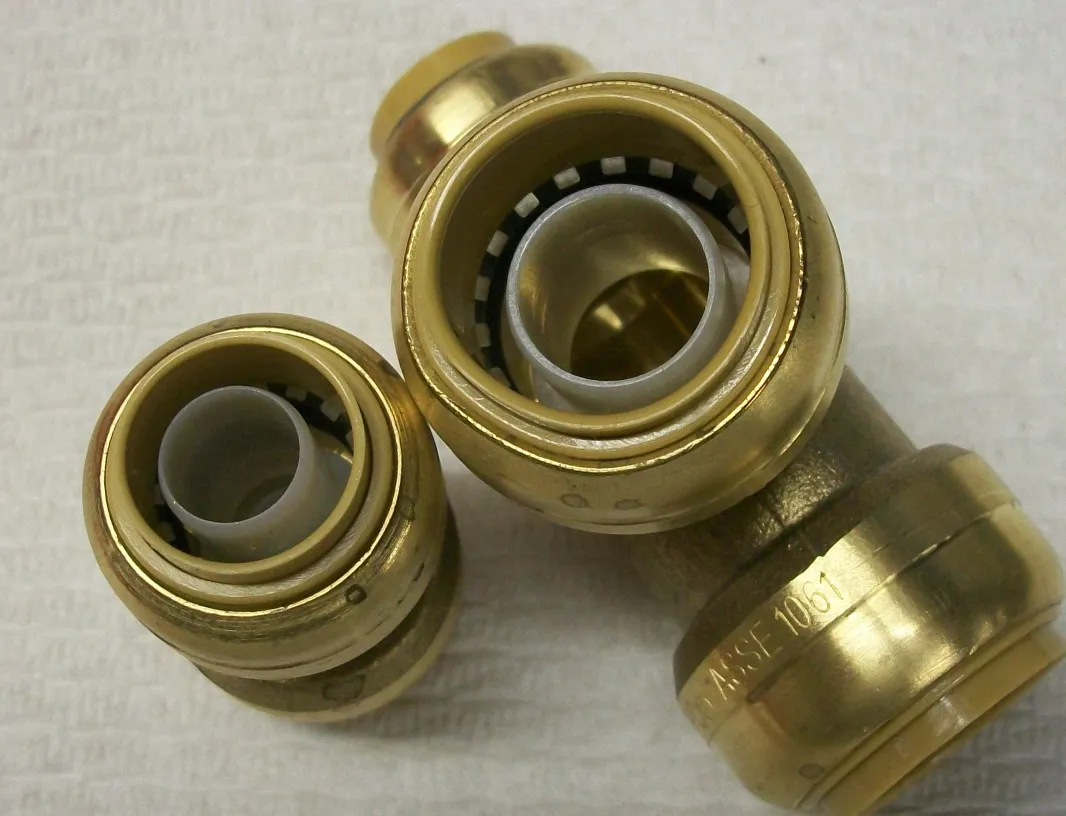

A SharkBite joint seals in two stages, according to the SharkBite Max installation guide. A stainless grab ring grips the pipe, then an EPDM O-ring is squeezed between the pipe and the fitting body. The guide says the joint holds only after the pipe clears the O-ring and bottoms out on the tube stop. The fittings are certified for CPVC made to ASTM D2846, in copper tube sizes (CTS). A 1/2-inch fitting takes pipe with a 5/8-inch outside diameter and needs 1 inch of insertion; a 3/4-inch fitting needs 1-1/4 inches.
Most of the guide's instructions are about the pipe. The pipe has to be round, with no scratches, nicks or gouges, and its end cut square without burrs, preferably with pipe shears on plastic. Mark the insertion depth with SharkBite's depth and deburr gauge, push the pipe in with a slight twist and confirm the mark ends up no more than 0.005 inch from the release collar. The PEX stiffener that comes loaded in brass SharkBite fittings can stay in place for CPVC, the company says. If the stub left by the old valve is marked or damaged, the guide says to cut it back and use a fresh section.
FlowGuard Gold's guide to servicing existing CPVC rules out ratchet cutters on pipe that is already in service. It recommends a C-style tubing cutter, which does not compress the pipe, or else a fine-toothed saw or a wheel-type cutter, and says to cut at least 2 inches past any visible damage.
To redo the joint, shut off the water, release the fitting with a SharkBite disconnect clip or tongs and inspect it for damage and debris. SharkBite Max fittings are meant to be permanent; the guide allows reuse only if the fitting is undamaged, the pipe is clean with no scratches or burrs, the depth is marked and the joint passes a pressure test. Where cutting back leaves too little pipe, FlowGuard recommends making the repair with CPVC fittings and solvent cement, and checking for a uniform ring of cement at each joint.
Why it matters: On a leaking push fitting on CPVC, check the pipe for an ASTM D2846 marking, recut old pipe with a tubing cutter instead of ratchet shears, look for scratches where the O-ring sits and confirm the depth mark meets the release collar.
Sources
- Replaced CVPC valve with sharkbite push connect and still leaking. Need help.Reddit r/Plumbing, Nov 8
- SharkBite Max Installation GuideSharkBite, Nov 9
- How To: Install SharkBite Push-to-Connect FittingsSharkBite, Nov 9
- Servicing CPVC Reference GuideFlowGuard Gold, Nov 9